read me your poetry, I might creep. 23.10.2026. Motto Kreuzberg
Posted in Uncategorized on October 23rd, 2026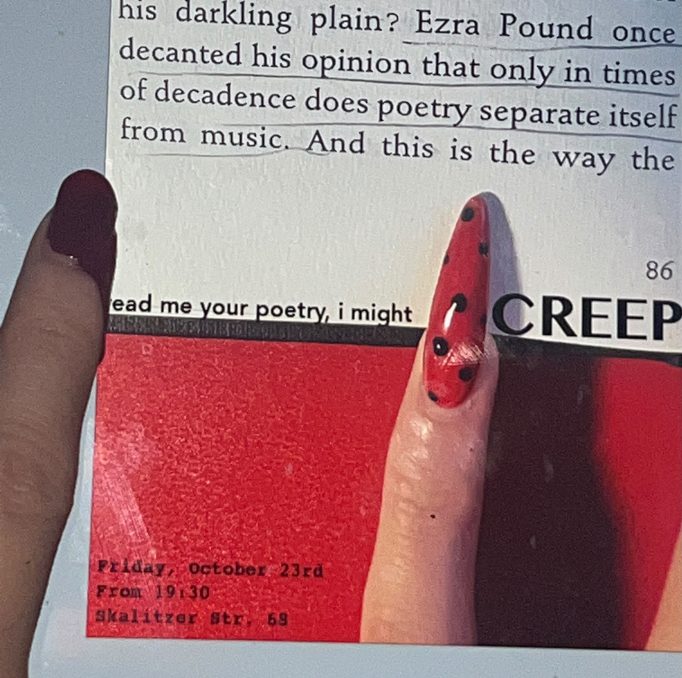
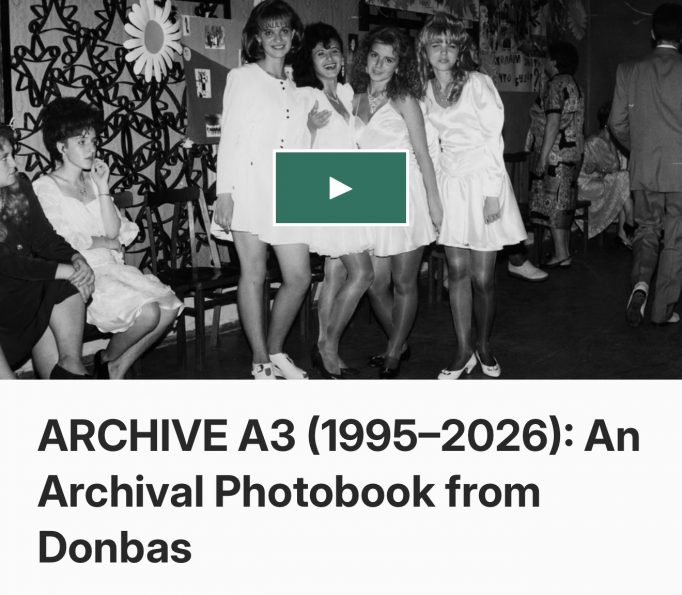
Support the Kickstarter Campaign for: ARCHIVE A3 (1995–2026). A book by Marko Kolomytskyi
‘This project originates from my own family archive, which was rescued from my flat in the occupied Donbas and eventually carried across borders to Paris.
In this book, I systematically juxtapose ordinary family photographs with political events occurring on the exact same day. It reveals how the bureaucracy of war progressively invades the space of personal memory and familial intimacy. To complete the geographic and emotional cycle of these documents, the entire edition will be physically printed and bound in Kyiv to directly support the Ukrainian publishing industry.’
MK
Head to the link in my bio to pre-order your copy. Standard books, hand-signed editions, and limited wearable art pieces are available now. (Free local pickup available for Paris & Berlin!)
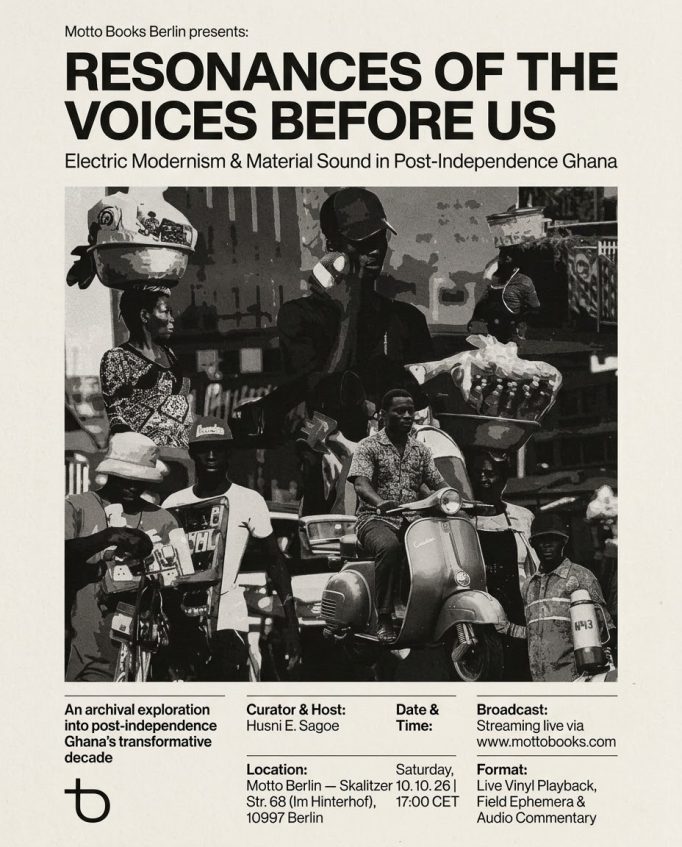
This Saturday at Motto: RESONANCES OF THE VOICES BEFORE US— Electric Modernism & Material Sound in Post-Independence Ghana. Curated and hosted by @blamekuuks a Ghanaian born curator and designer.
Positioned at the intersection of post-independence cultural sovereignty, analog experimentation, and ancestral memory, this broadcast traces the electric transformation of West African popular sound across the 1970s. As acoustic palm-wine roots and big-band brass gave way to organ-led, psychedelic studio experimentation, musicians across Accra and Kumasi developed a distinct form of electric modernism.
Approaching rare vinyl pressings, independent label archives (Essiebons, Gapophone, Bokoor), and physical ephemera as living historical artifacts, the three-hour session combines continuous playback with live curatorial commentary.
Listen in person from the Motto courtyard in Kreuzberg or tune in online via the live stream.
—
Date: Saturday, 10.10.2026
Time: 17:00 CET
Location: Motto Berlin — Skalitzer Str. 68 (Im Hinterhof), 10997 Berlin
Curator & Host: @blamekuuks
Broadcast: Streaming live via mottobooks.com
Format: Live Vinyl Playback, Field Ephemera & Audio Commentary
Entry: Free / Open access
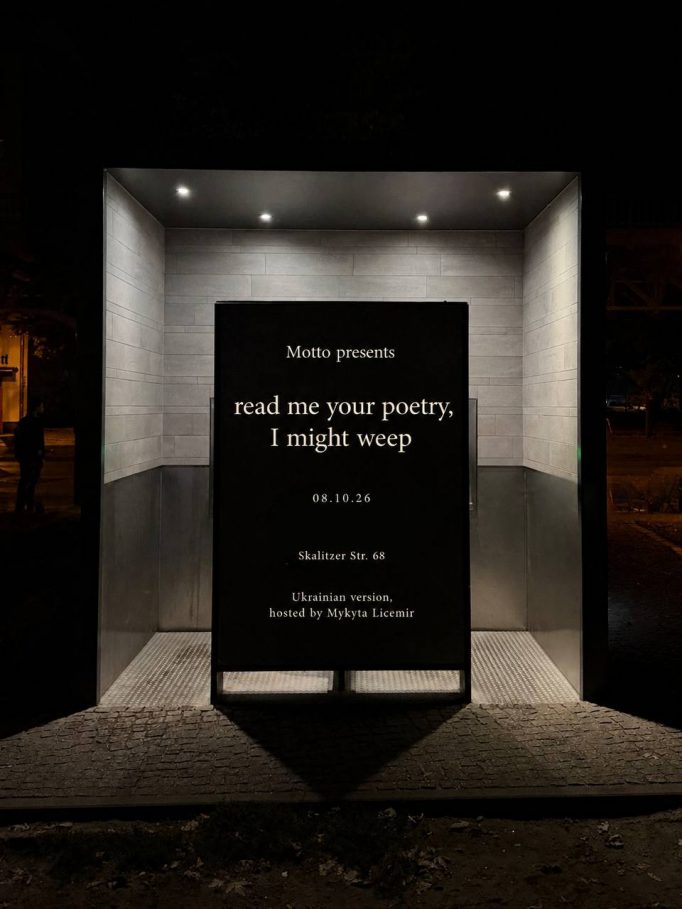
read me your poetry, I might weep
#2 Ukrainian version
Hosted by Mykyta Licemir
Thu. Oct. 8, from 7pm
Motto Xberg
Skalitzer Str. 68
@mykyta_licemir
Words by Nancy Li
1. The Daughter of the Easter Egg by Zora Mann
A sexy and sexless read. Conveniently designed for bratty souls counting french fries for living and authentic baby girls who finally made it to Japan and squirted. It is all quite fanatic until you develop a secret lunacy around the god’s stye. Fashion! Friends! It hurts faster than it ever heals. Cultivate a thicker skin while trying to destroy the fat underneath. Change the name so the glam falls off her skin then she can finally live off the scars well curated by the industry. Exhibit A: – there is something of a more severe significance on earth today than holding a broken conversation with Karl and his diet…
2. Jean-Michel Wicker – e industrial
Through the egg yolk yellow pages and the blankness left intentionally for mind-fucking or else, I produced more thoughts than usual, about repetition and art, about heroine and micky mouse, about Berlin underground and anti-social talkativeness. The root has been set and branches of queer thinking will grow. Now time to eat an egg and ghost some notes about “e”s and industrial desire.
3. Pencil Cotton Dust by Letizia Werth
Distorted women, featureless figures, invisible shadow – to call it a Hitchcock film on canvas is no exaggeration, pickled with typical suspense and sponsored by countless atypical minds. Pencils collect dust on purpose so that a rose is a rose is a rose can emerge and be swept away. A drawing book rarely touches me but this one, exceptionally disturbing and fatally poetic, has taken me on a tour to the psychiatric clinic Hopital de Salpetriere in the nineteen somethings by non-demand, so I meet horror trapped in “female body”.
4. Mr. Peanut Drawings by Vincent Trasov
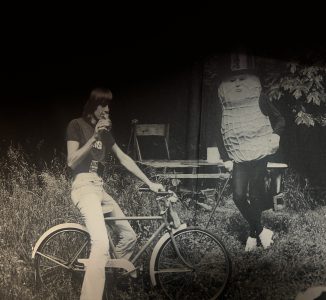
Peanut as prey, peanut as poet, peanut as politician, peanut as pope, peanut as Picasso, peanut as playboy, peanut as press… After all, maybe a perfect candidate for mayor! In the campaign, P.E.A.N.U.T stands for Performance, Elegance, Art, Nonsense, Uniqueness and Talent – all is rising with intensity and scale, yet the intention of which is questionably lacking.
Swimming through the nutty drawings of Vincent Trasov, the reality is loose at hand; while the better, healthier illusion slowly takes over our personal and collective myth. Enjoy a peanut and scan this , the urgent need of intensive care a peanut, another moral being.
Available at Motto Berlin and online
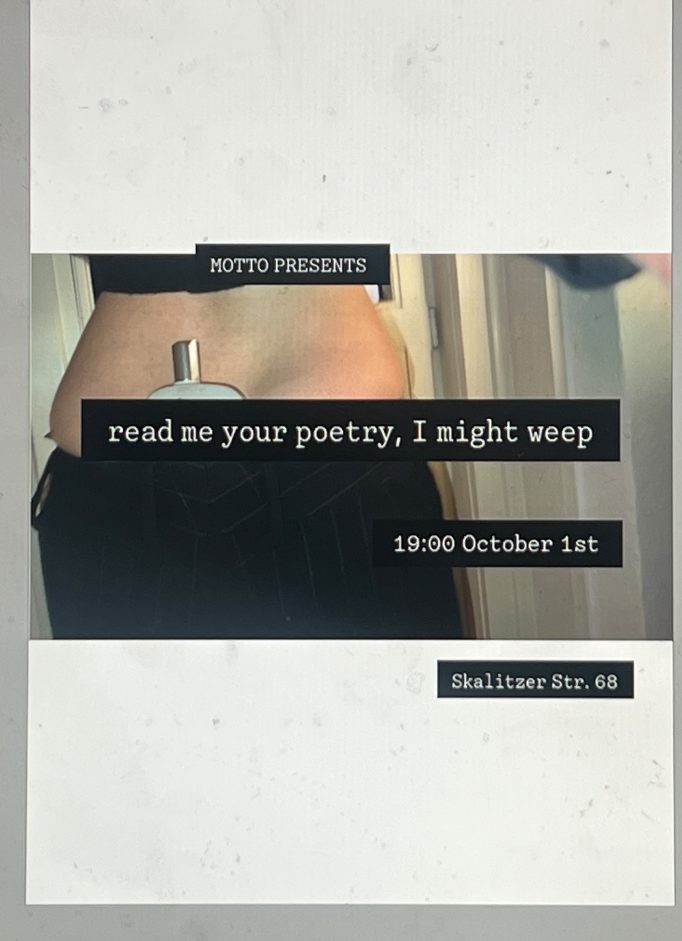
read me your poetry, I might weep
Thursday Oct. 1
From 7pm
Secret guests (and open stage)
Motto Kreuzberg
Skalitzerstr. 68
10997 Berlin
U1 Schlesi
Every Thursday from now on
More info or ideas and submissions:
berlinevents (at) mottodistribution.com
NOIRE was created in Kyiv in 2023. At a moment of complete uncertainty, we realized that we were missing a platform that would speak to people like us: tell stories, show new releases and build community in the future.
After establishing ourselves online, which still remains equivalent to the magazine you are holding in your hands right now, we realized that simply being a retransmitter was not enough, and we wanted to tell more through the magazine. Where there is no influence of algorithms and the constant pressure to stay relevant.
It was important to us that people choose us consciously, because they wanted to, and not by chance. Aspirational journalism became the main concept of all issues.
Three covers of issue 3 are available
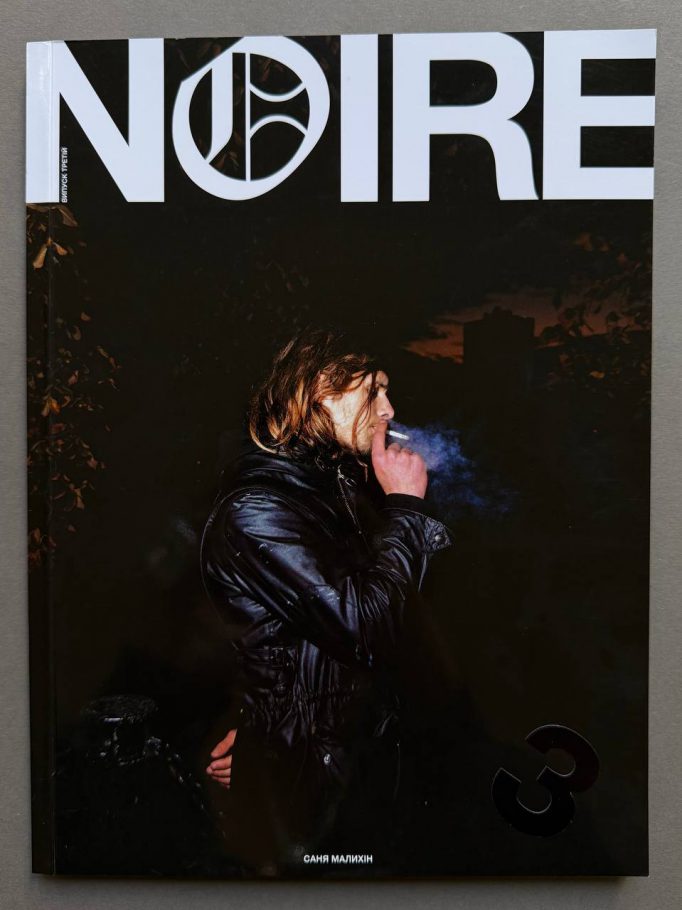
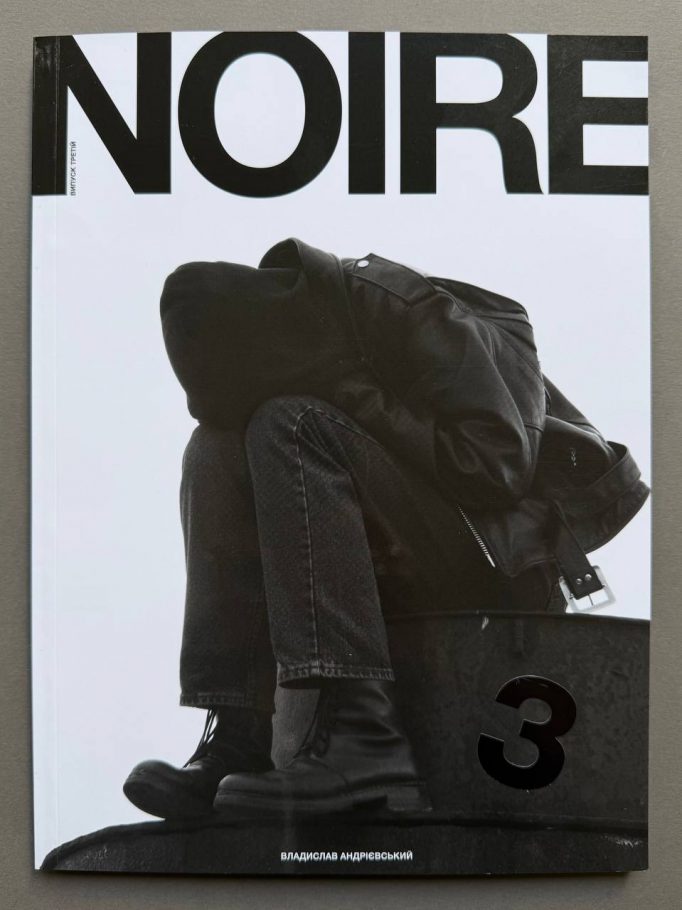
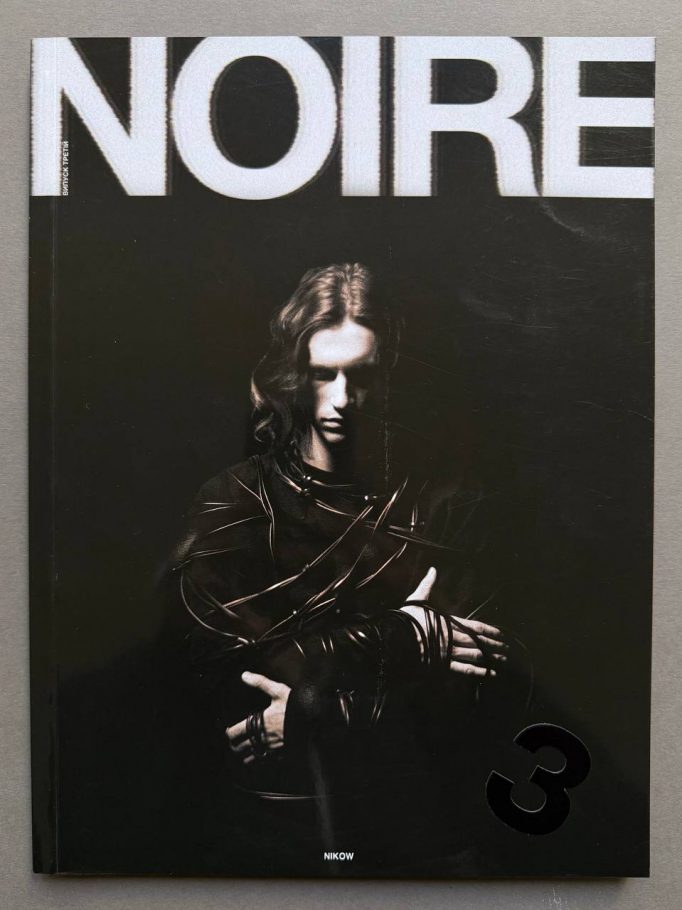
ABOUT THIS ISSUE
Every city has its own spirit. You can instantly feel its character and energy. That’s why we couldn’t ignore what has always been in plain sight and what has shaped us.
The second issue is dedicated to Kyiv. To the spirit of the city, to the way it functions, and to the unique phenomena that exist only here. To why, despite everything, it always feels warm, young, and joyful. Just like you, and just like us.
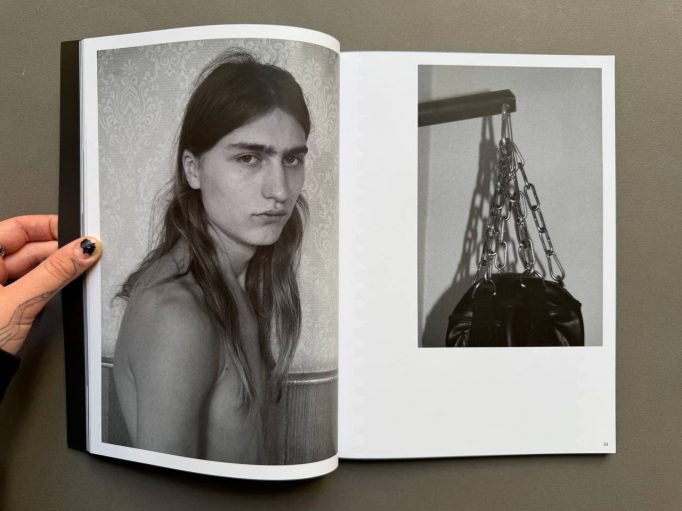
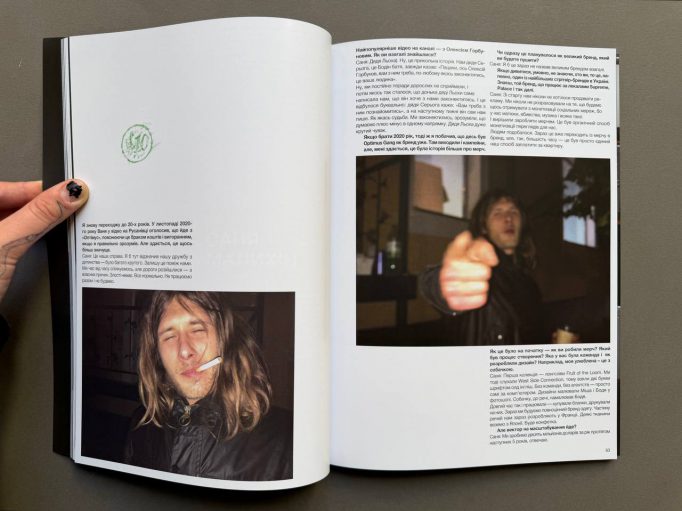
CONTENTS
An interview with Anton Belinskiy, designer and creative director of «Anton Belinskiy».
«Why Did We Start Eating This Way?» A piece dedicated to Kyiv’s gastronomy and the unique phenomenon of its dining scene. An interview with Oleh Kamluk, cofounder of «Kashtan Coffee», «LYPA na Lypynskogo», and «Kashtan Wine». An interview with Illia Siomin, chef and co-founder of «Food Spot», «Pie Spot», «Spelta», and «CHICA Poblana». An interview with Mirali Dilbazi, chef and co-founder of the fine-dining restaurant «Mirali».
«Kyiv Through the Eyes of Photographers». A curated collection of images showcasing different visions of the city, because Kyiv means something different to everyone.
«Ghetto romance: how urbanism and culture create the paradox of ‘loving troubled places’» the article by Ivanna Malii, urbanist and blogger.
Editorial photoshoots through which we express our vision and style.
All texts are in Ukrainian.
Order:
Words by Nancy Li
Brain is purely decorative, heart is on the sleeve. they get a bit sore when words are precise and lost . I start to wonder about youth, death and all other themeless things. Wide and expressive… reminding you of the fresh grass field your childhood lover once took you, or the flickering fire dancing and dying throughout the sought-after fall. Get these books and make them think you are smart and elusive, on train, on site or whatever. Be a big reader, and eat this cold soup!
1.Beat Scrapbook – Gerald Nicosia
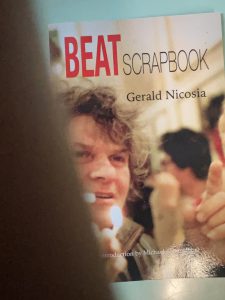
Ok, this arrived by surprise – a compelling little poetry book to be carried to wherever thoughts and memories allow us to be. All the legendary minds from the beat generation, the golden era for revolutionary poets and liberating souls – they are not so far from us. Melancholy tastes sweet when Ferlinghetti (my own personal poetry hero) showed you around his house and argued about maple syrup and truth. Nostalgia caught me off guard long before I was born.
2. ¨Strangers’ Guide to Home Territories¨ by Steve Bishop
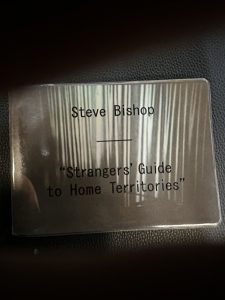
Always a delight to flip through this book at whatever pace god blessed you! A piece of adorable still cinema about trespassing with its romantic quality – we’ve all been there… It reads like a movie, some characters are missing. But somehow you know where to place your eyes, where to hide your quiet trace. Through the half-drawn curtain, light for the first time unravelled the confused face. Over the unmade bed, mystery is ruminating a glorious skin. Keep out – “you’d be nice to come home to”. Maybe a nice gifting solution to your next beloved stranger?
3. Not Joy Division by Andrew James Paterson
Still reading and I don’t need to stop… Their producer Martin Hannett used to describe the band as a poet plus three members of Manchester United… not the only thing that was painstakingly true about their music along with the industry that drowned Ian Curtis and many others. So much myth to be looked over, so many names misremembered. Justice is another thing that Zeus forgot to put in Pandora’s box. We will never have it but we keep questioning… If not joy division, new order, who were they behind the sound, voice and pictures that could be so easily lost in the documentation of all unjustifiable identities? And where are they now?
Words by Nancy Li
“How can such dark color come from only light colours?”
This question stays with me. It leads to somewhere deeper, in regardless of it is of chemical nature or philosophical one.
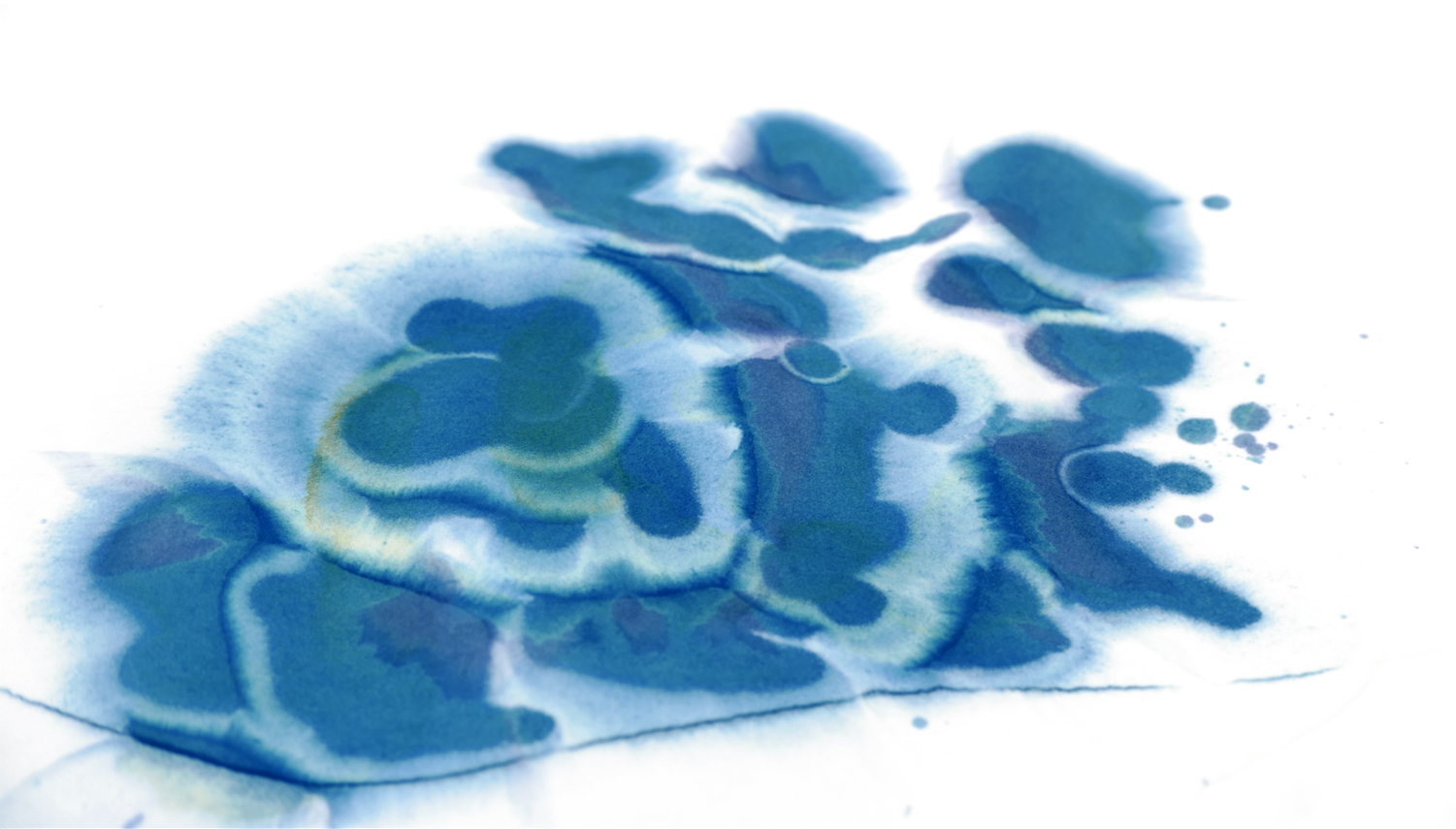
I wouldn’t necessarily associate Berlin with blue, but the history has proven me wrong. When Kirsten mentioned this term at our first meeting casually, light flooded out of my eyes. It is simply romantic to name a color after a city or country. Thinking of China red along with the easiest associations with the Forbidden City and the red envelop that is supposed to bring you fortune both metaphorically and realistically. However, long before the romanticist movement came along, a “new” shade of blue was already accidentally created by H. Joh. Jacob Diesbach (1670 – 1748) and Pietist Johann Conrad Dippel (1673 – 1734) in Berlin in 1706. Since then, world was not the same. From art to medicine, from food to alchemy, the influence of Berlin blue has gone wider than our perception of colors and trades. Before we acknowledged this significant experiment later being repeated countless times, the trademark of Berlin Blue (also called Prussian blue) has long been part of who we are as much as the city ever is.
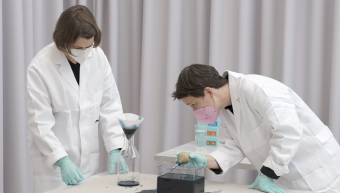
In 2021, the artist Kirsten Stoll with her sculpture and ceramics background and Prof. Dr. Britta Lange from Humboldt University of Berlin chose a conventional laboratory setting and tried to reenact this ancient experiment with curiosity and contemporary perspective. Instead of using the test tube as old-school chemist did, they used capillary paper to register the ever-changing patterns of this unique, bright, deep blue, born from the yellow-orange tone given by iron sulphate and the transparent tint from blood salt. Many questions started to emerge in time of shades changing, thoughts forming, research in progress. Is chemistry a (natural) art? Where is place of originality in the imitation of process? Over the past three hundred years, Berlin Blue has been copied, renamed, put into use by countless industries, benefiting thousands and millions of people, then forgotten at some point, at least the origin of it. Gazing into the blue bacteria-like molecules changing faces from one page to another, it is not so hard to have the urge to remember part of the history that has shaped how we see blue today. Britta and Kirsten, devoting years of research and work to a singular passion, they simply observe and let the blue take their breathe away. New phenomena is constantly evolving, shifting, making its own voices being heard and hopefully understood by many others, leading us to the ever dazzling galaxy of unknown. Up until today, those liquids are still somewhere undergoing a reaction which none of us know where it will take us.
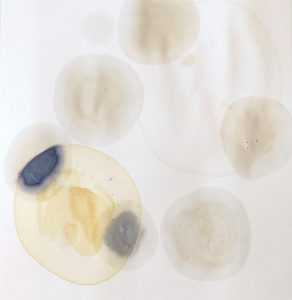
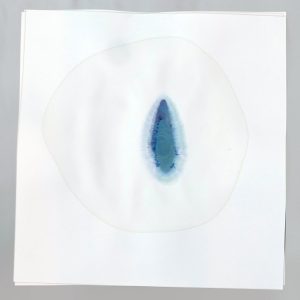
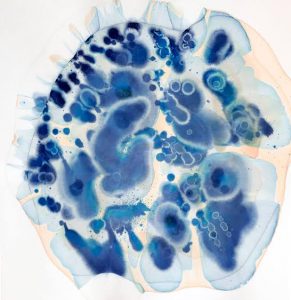
At the end of our meeting, knowing I am Chinese. Kirsten shared with me her enthusiasm about Chinese tea and ceramic making which she used as an experimental practice before applying paint on her larger-scaled sculptures. By transforming minute waste into meaningful objects with mindfulness and reflection, it unveils a way of thinking I find particularly refreshing in a landfill stormed with consumer-oriented arts and images numbing our senses today. It comes from an yearning for depth, and a sensation that is bound to survive hundred years of unpredictability and human flaws.
Aufsaugen – verbreiten – vermischen – übertragen. Berliner Blau und das Kapillarische (Absorb – spread – mix – transfer. Berlin Blue and capillarity) by Dr. Britta Lange and Kirsten Stoll, written in German, translated to English by Matthew Gyngell
Every cover can be transformed into a poster to be hung at your home or anywhere else
Available at Motto Beriln and Online
Words by Nancy Li
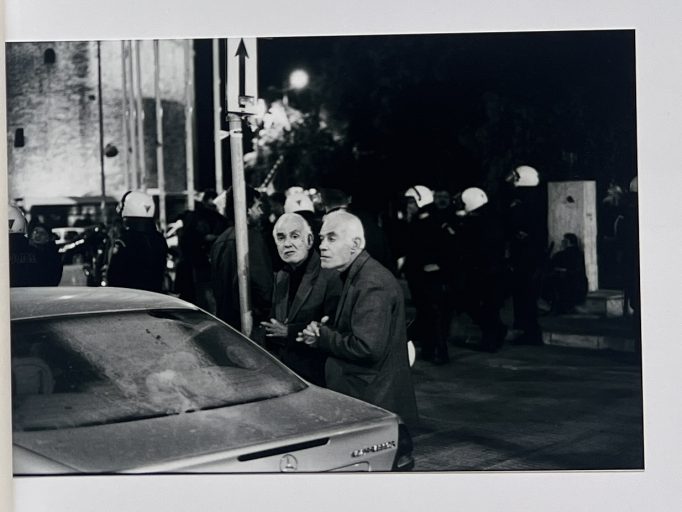
We need stories like this in self-absorbed days to inspire us on strength, persistence, pain, solitude and to conclude, absurd action. If pilgrims in Tibet are known to tread through mountains and rivers to preach towards an invisible future. Then what is Anton’s purpose? Crossing borders of seven countries, reaching the ever strange lands. What is the profoundest philosophy he might have gained throughout his journey about giving up and starting again.
After all, there is tomorrow after another tomorrow. Facing wrinkled sea may you forget about time vanishing behind us. Walking on the forthcoming road may you see light dimming brightly over horse’s back. Further away from modern living, he was measuring the ever so abstract notions of freedom and uncertainty by steps, one heavy with question, after another light with acceptance.
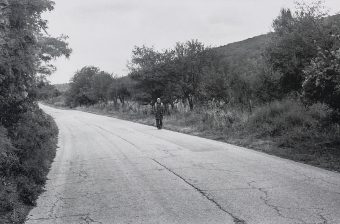
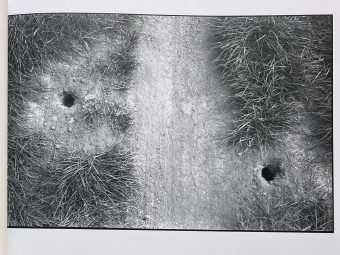
When Anton walked into our store, he looked like someone with stories to tell. We sat down together outside over sporadic silence and shared passion for poetry and black and white photography. Needless to say more, you will find his personality shone briskly through the frames of moments that he thoughtfully captured with his lens – ever lasting until his next unplanned journey.
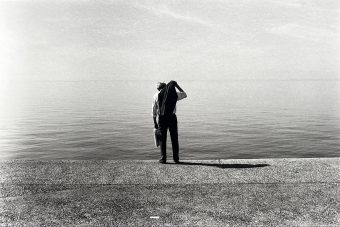
STREUNER by Anton Gartung is a photo collection documenting Anton Gartung’s three-month walk from Berlin to Athens. Every copy is numbered and signed by Anton himself with a photograph available to gift to any friend who is in vain
Poem by Ferdinan Uth in both German and English
Available at Motto Berlin and online